Foods that may support better sleep: and how to use them
If you struggle to fall asleep, stay asleep, or if you wake up feeling like you barely slept at all, you’re not alone — it’s one of the most common things clients ask me about.
Here’s the thing, though. There’s no single, magic, “sleep food” or fix for poor sleep. There can be a whole load of contributing factors. But alongside the basics (a consistent routine, managing stress, sensible caffeine, enough time in daylight, a balanced diet, and exercise), certain nutrients and foods may genuinely support your sleep quality.

Your sleep doesn’t start at bedtime — it starts with what you do all day (Image: Unsplash)
Before we talk food: the foundations still matter most
If the following basics aren’t in place, start here — without these, improvements from any single food or supplement tend to be limited:
Regular meal timing (this can support steadier energy and circadian rhythms, and for some people, a too-light dinner — or long gaps without food — can contribute to waking hungry in the night)
Enough calories overall (under-eating is a classic driver of those painful 3 am wake-ups)
Reduce caffeine late in the day (caffeine has a half-life — the amount of time it takes for it to be reduced to half its original amount — of around 4-6 hours, which means many people benefit from not having caffeine in the afternoon)
Alcohol awareness (it often knocks you out early, then disturbs your sleep later)
Movement in the day (light movement and exercise help your circadian rhythm set properly)
Now, let’s get down to the details.
1) L-tryptophan
L-tryptophan is an essential amino acid your body uses to make serotonin, a neurotransmitter involved in mood (aka the “happy hormone”, which is then involved in making melatonin (the famous nighttime hormone).
There’s evidence from a meta-analysis that tryptophan supplementation can improve certain aspects of sleep (it’s not a silver bullet, but it has been shown to help).
Food sources of tryptophan
You’ll find it in many protein foods, including:
Poultry, meat, fish
Eggs
Dairy (especially Greek yoghurt, milk, cottage cheese)
Soy foods (tofu, edamame)
Pumpkin seeds, chia seeds, oats, nuts, legumes
How to use it in the evening
Tryptophan does its job best when it’s part of a balanced meal or snack (e.g. carbs help tryptophan to get where it needs to go) — often, people find that protein and fibre-rich carbs work well.
Easy examples:
Greek yoghurt, oats and chia
Wholegrain toast and nut butter
Hummus and oatcakes
Dinner with a protein, veg and a portion of carbs such as rice, potatoes or wholegrains
2) Magnesium
Magnesium is often linked to sleep as it’s involved in nervous system function and muscle relaxation, and low magnesium status has been associated with poorer sleep outcomes in observational research. That said, supplement trials (considered the gold standard of research) are a little mixed, and it would be great to see more well-designed trials to better understand the relationships between magnesium and sleep.
For some, supplementing may be appropriate—particularly if dietary intake is low or there’s reason to suspect low magnesium status—while for others it might not be. Either way, it’s worth aiming to meet your magnesium needs through food first.
Food sources of magnesium
Nuts and seeds (pumpkin seeds are great)
Legumes
Dark leafy greens
Wholegrains
Avocado, peas
Dark chocolate (sensible portions, of course)
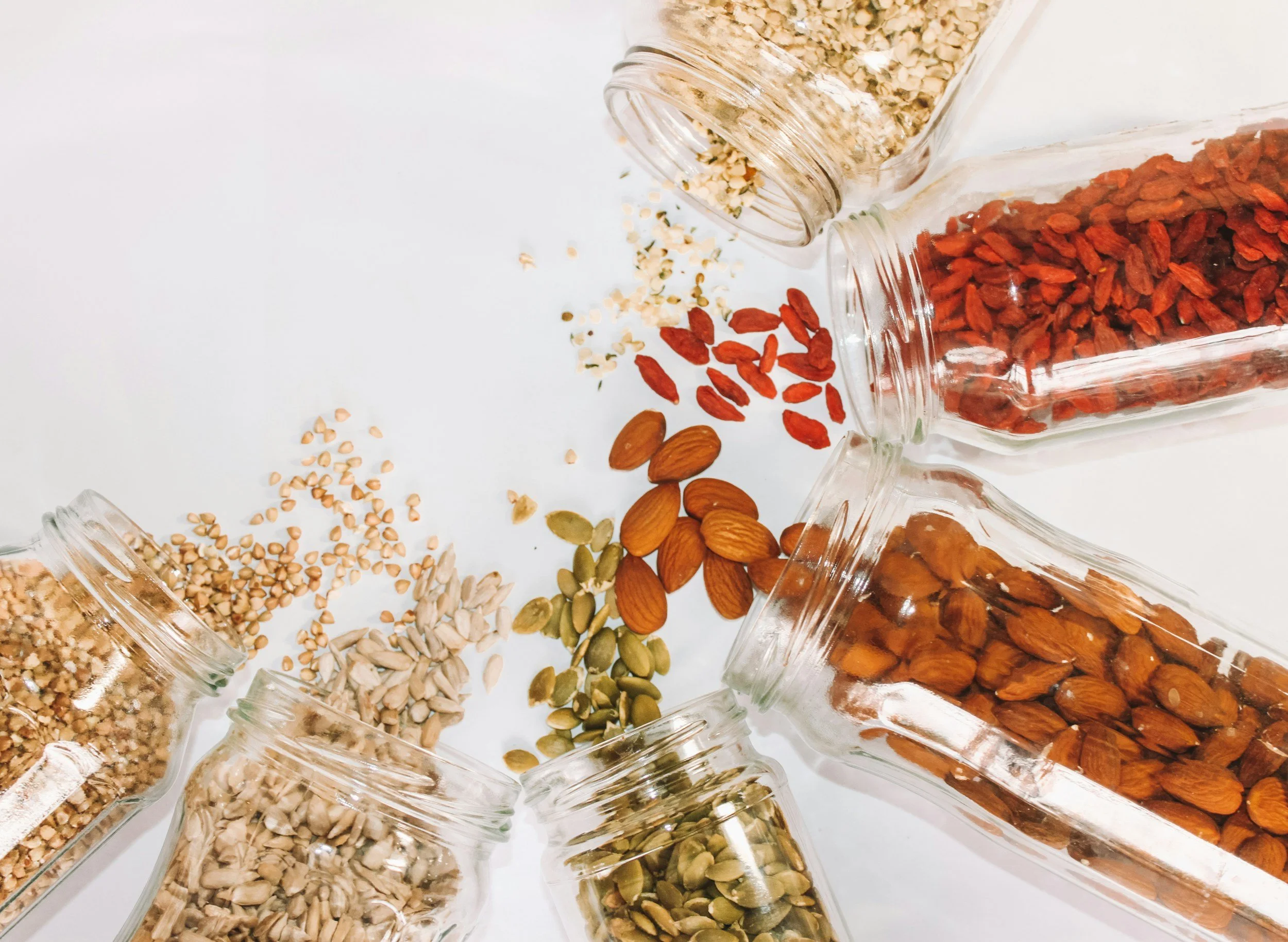
A small handful of nuts and seeds can be a simple evening wind-down snack
Practical evening ideas
A small handful of pumpkin seeds and almonds
Greek yoghurt, cacao and chia
A lentil and or bean-based dinner earlier in the evening
3) Vitamin D
Vitamin D, and its impact on sleep, features in a fair bit of research, and if you’re low in vitamin D (which is common in UK winters), it’s worth addressing.
UK guidance (general)
Advice on vitamin D from the NHS is that 10 micrograms (400 IU) per day is enough for most people who choose to supplement, and to avoid exceeding 100 micrograms (4,000 IU) daily unless advised by a clinician.
NICE also notes adults should consider a daily vitamin D supplement, particularly in the autumn and winter months.
Food sources of vitamin D
Food alone often won’t fully cover needs, but it helps:
Fatty fish (salmon, mackerel, sardines)
Eggs
Fortified foods (some cereals, dairy/alternatives)
Mushrooms (some contain more vitamin D, especially if exposed to sunlight, gill-side up!)
4) Melatonin
Melatonin naturally rises in the evening (especially in low light) and helps regulate your sleep–wake cycle. Some foods contain melatonin, typically in much smaller amounts than supplement doses, so any sleep effect from food is likely modest and may also relate to other compounds in the food (like polyphenols/antioxidants) rather than melatonin alone.
Tart cherry (juice or concentrate)
There are some small clinical studies showing that tart cherry juice may increase melatonin levels and improve sleep measures (like sleep time and efficiency) in certain groups, though the effects are typically described as ‘modest’.
How to try it:
Start with a small glass of 100% tart cherry juice (unsweetened). I like Biona’s Tart Cherry Juice but it does get a little pricey if you’re doing this practice regularly)
Try it 1–2 hours before bed
Give it 7–10 days, not one night
Real-world note: I’ve personally tested tart cherry juice myself and noticed I fell asleep faster and woke up less. I tracked my sleep with my Oura Ring, which supported my conclusions with real-time data. I’ve even used tart cherry concentrate sachets when travelling to manage jet lag, and I've found they helped me considerably. Of course, this is not a real study, just an n=1! However, it was an interesting experiment and was a helpful part of my sleep routine.
Kiwi fruit
Kiwi is surprisingly well-studied for a fruit. Research trials commonly use two kiwis about an hour before bed, with improvements reported in sleep outcomes in specific populations.
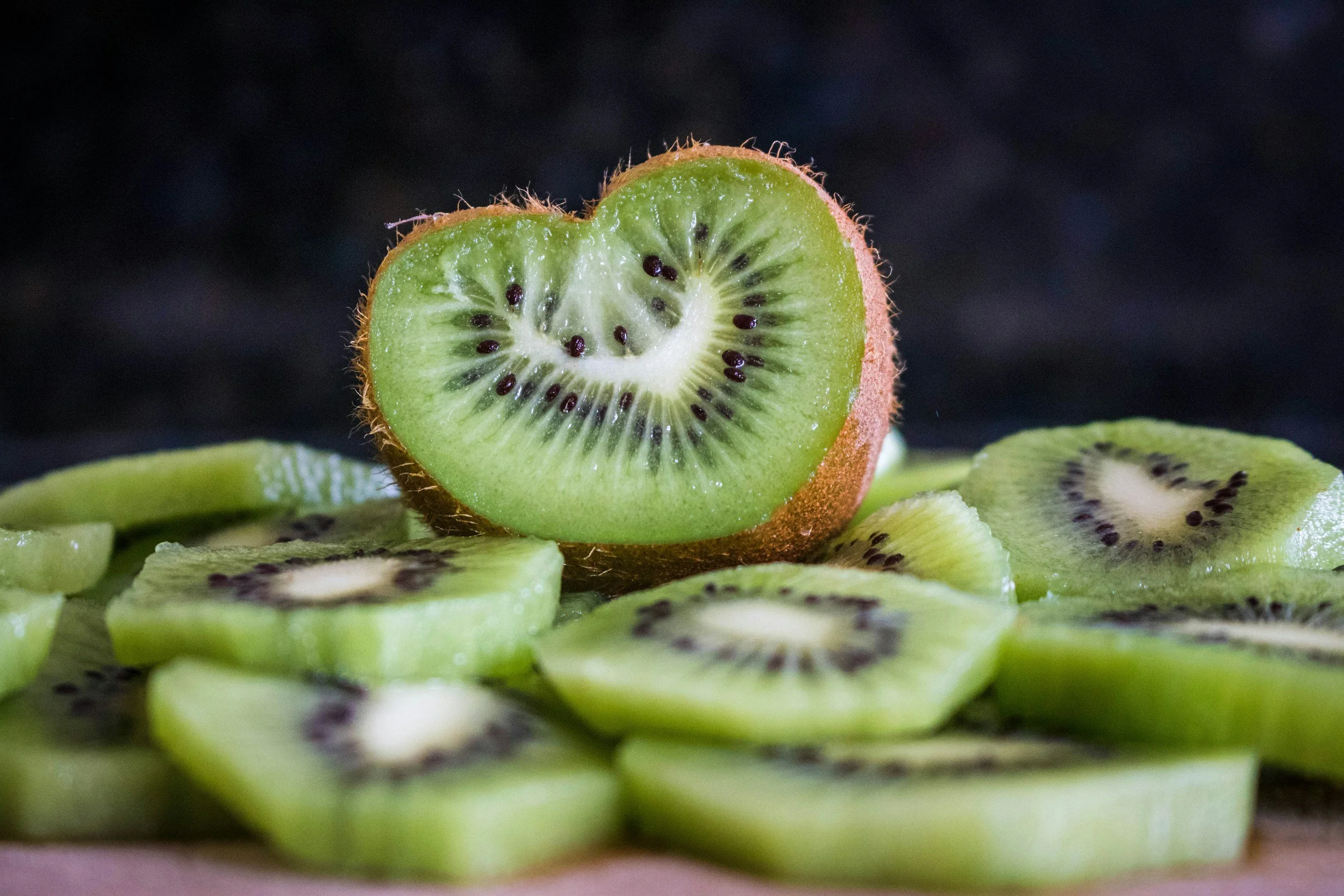
Try two kiwis before bed and see what changes
How to try it:
2 kiwis, around 60 minutes before bed, for 2–4 weeks
What to actually eat in the evening (simple, realistic options)
Sure, nobody wants a bedtime snack of mackerel. Think of these as either dinner or pre-bed options.
Best “near bedtime” ideas
Tart cherry juice
Kiwi fruit
A small handful of almonds and pumpkin seeds
Greek yoghurt with oats/chia (if dairy suits you)
Wholegrain toast with nut butter (if you’re waking hungry at night)
Better as dinner ingredients (earlier in the evening)
Fatty fish (vitamin D, protein)
Beans/lentils (magnesium, steady carbs/fibre)
Leafy greens and wholegrains (magnesium support)
Eggs (vitamin D and tryptophan-containing protein)
A few common mistakes I see
Too little dinner (often leads to blood sugar dips overnight and waking at 2–4am)
“Healthy” but tiny snacks when you actually need a proper meal
Late big meals that trigger reflux or discomfort (especially spicy and high-fat foods)
Alcohol as a sleep strategy (it’s often a sleep-wrecker in disguise)
When to get extra support
If you find that your sleep issues are persistent (weeks to months), severe, or affecting your mental health, speak to a healthcare professional.