Nutrition through menopause: what you need to know
Menopause is a natural stage of life, but how we experience it can be very different. For some, it passes with little fuss, but for others, symptoms such as hot flushes, changes in sleep and mood, fatigue, and brain fog can significantly affect everyday life.
In this article, we’ll look at what’s happening during the menopause transition, some of the common symptoms, and where nutrition and lifestyle can play a supportive role.

Menopause is a natural transition, but that doesn’t mean it always feels easy. Every experience is different — and understanding what’s happening in your body can make all the difference.
The stages of menopause
So let’s start by breaking things down.
Menopause usually occurs in our late 40s to early 50s—for some, it can begin much earlier.
It’s split into three stages:
Perimenopause: This first stage is the period of time leading up to menopause when oestrogen and progesterone start to fluctuate. Experts at Harvard explain that during this stage, periods may become irregular (shorter, longer, heavier, lighter), along with symptoms such as sleep disturbances, mood swings, and hot flushes. While perimenopause usually lasts approximately three to five years, it can stretch to as many as eight or even 10 for some.
Menopause: This second stage (the one we know most about) is confirmed when you’ve not had a period for 12 months. It’s actually a single point in time — one day. Everything after that day is postmenopause.
Postmenopause: This final stage — the years after menopause — is when hormone levels stay low. Some symptoms may ease, but others—like bone density changes — still need our attention.
Throughout the menopause transition, levels of hormones including oestrogen and progesterone fluctuate and eventually decline. We ovulate less frequently until ovulation eventually stops, along with our periods.
Common menopause symptoms include:
Hot flushes (the poster child of menopause symptoms but certainly not the only or main one!)
Night sweats
Mood swings, irritability, and anxiety
Weight gain and changes in body composition
Bone density loss and, with that, an increased risk of osteoporosis
Difficulty sleeping
Fatigue
Low sex drive and vaginal dryness
The severity of these symptoms, and how long they last, will differ for everyone.
Changing the way we think about menopause
And while experiences of menopause vary hugely, so does the way we think and talk about it.
I've become increasingly interested in how we talk about menopause, because the meaning we attach to it isn't the same everywhere.
In Western cultures, menopause has often been framed quite negatively — around ageing, loss and decline. It can feel like an end or something to fear. But that isn't the attitude towards menopause everywhere. In Japan, for example, the term kōnenki describes the broader transition through midlife and indicates a period of change or a new stage of life.
None of this is to minimise how difficult menopause can be. For some women, the symptoms can be very disruptive. But I'd love to see us get to a place where women are properly supported through the difficult parts, without menopause itself being treated as something awful to fear.
After all, it's a transition that virtually all women will experience — and perhaps changing how we talk about it is part of supporting women through it better. And while nutrition can't prevent these changes, eating well can help support our health as we move through them.
5 ways to support your body through menopause with nutrition
So, what does that look like?
As we move through perimenopause and menopause, we tend to lose muscle more easily; how we store body fat can change, as can blood sugar management, and looking after our bones becomes increasingly important.
But that doesn't mean you need a special menopause diet. The basics of eating well don't suddenly change — there are just a few things that can be worth paying a little more attention to.
1. Prioritise protein and muscle
We naturally start to lose muscle as we get older, and the hormonal changes around menopause can contribute to changes in muscle mass and strength too. That makes looking after our muscle particularly important during this stage of life.
Protein plays an important role in maintaining muscle, so aim to include good sources regularly — such as fish, eggs, meat and poultry, dairy, tofu, beans, lentils, nuts and seeds.
And nutrition is only part of the picture. Resistance exercise is particularly important for maintaining muscle and strength as we get older, whether that's lifting weights, using resistance bands or doing bodyweight exercises.
2. Look after your bones
Most of us probably remember being told to drink our milk as children to help keep our bones strong — and calcium remains just as important as we get older.
Studies show that as we age, our ability to absorb calcium decreases and, unfortunately, falling oestrogen levels can accelerate bone density loss, increasing the risk of osteoporosis. So, to keep bones healthy, it’s important to get enough calcium and vitamin D, which helps the body absorb calcium.
The British Nutrition Foundation recommends the following daily amounts for adult women:
Calcium: 700 mg/day
Vitamin D: 10 µg/day
For calcium-rich food options, prioritise:
Milk and dairy products like yoghurt and cheese
Green, leafy vegetables
Foods fortified with calcium, such as certain breads and cereals
Fish like sardines, where the bones are eaten too
There's something else to consider too, because we make vitamin D when our skin is exposed to sunlight, but in the UK there isn’t enough sunlight during autumn and winter for us to make sufficient vitamin D. The NHS therefore recommends that everyone considers taking a daily 10 µg vitamin D supplement during these months.
And finally (I know, it’s a lot), exercise matters for our bones too. The resistance exercise we talked about above also helps here, along with weight-bearing activities such as walking and running. For exercise ideas, check out Exercises Every Woman Should Do to Support Bone Health from Women’s Health.
3. Eat plenty of fibre and plants
Fibre is important at every stage of life (I bang on about it all the time!), and menopause is no exception. Eating plenty of fibre-rich plant foods can support your gut and heart health, help keep you regular, and make meals more satisfying.
Rather than focusing on any one particular food, aim to include a good variety of plant foods across your week, including:
Vegetables and fruit
Wholegrains, such as wholemeal bread, brown rice and oats
Beans and pulses, such as lentils, chickpeas and beans
Nuts and seeds
A simple place to start is to swap refined grains for wholegrain versions where you can, add an extra portion of vegetables to meals, and include nuts and seeds regularly.
You can learn more about getting variety into your diet in my article Should you be eating 30 plants a week?
And what about phytoestrogens?
You may have heard about these in relation to menopause. Phytoestrogens are naturally occurring plant compounds with a similar structure to oestrogen, although their effects in the body are much weaker. Some research suggests that phytoestrogens — particularly the isoflavones found in soya — may help reduce hot flushes for some women, although the evidence is mixed.
You'll find them naturally in foods including soya and tofu, flaxseeds, sesame seeds, beans, and some wholegrains — many of the foods you're already including in a varied, plant-rich diet.
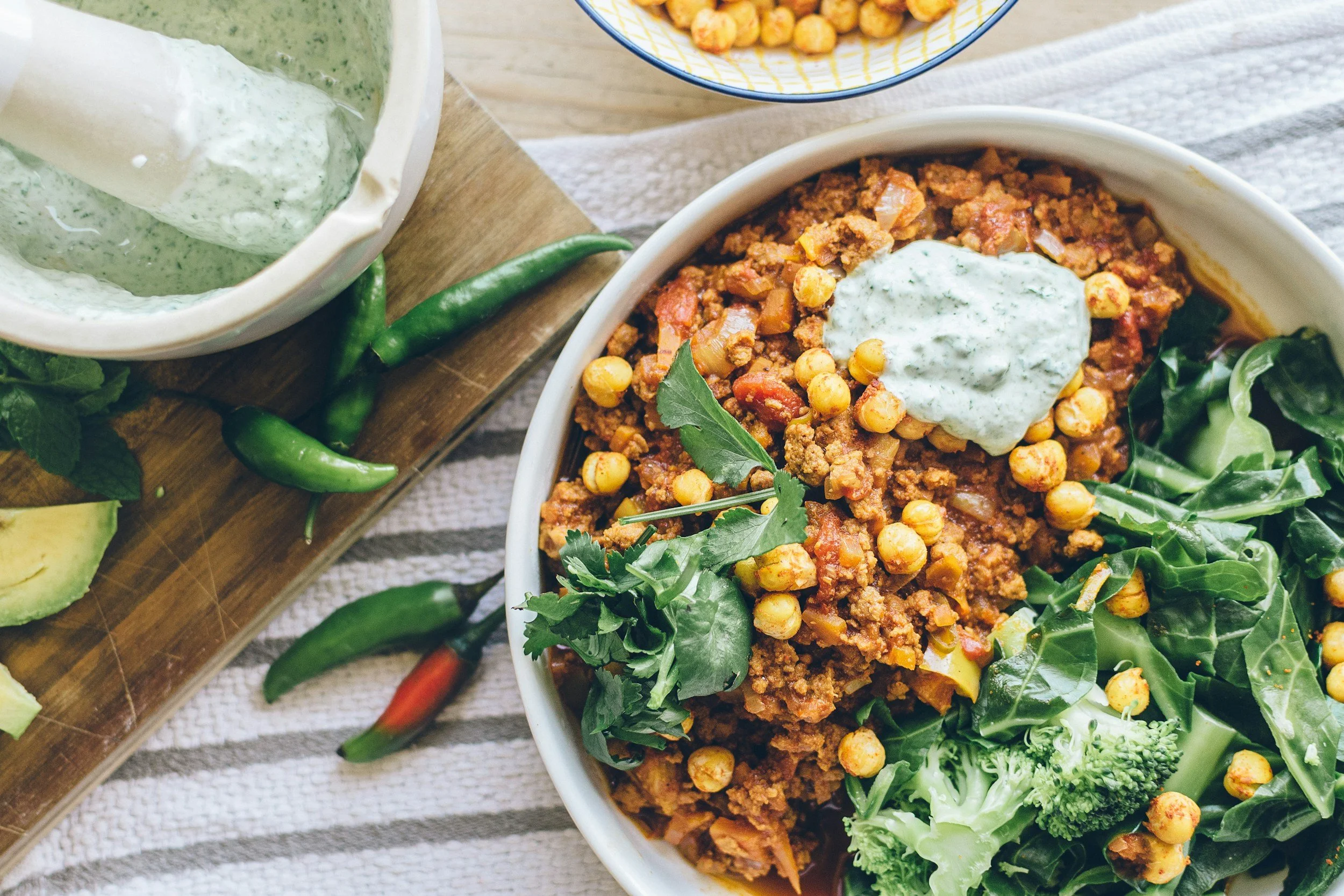
Lentils and chickpeas provide fibre, plant protein and naturally occurring phytoestrogens.
4. Choose quality carbs and healthy fats
Changes in hormones, body composition and insulin sensitivity can affect how our bodies manage blood sugar as we move through menopause. But this doesn’t mean you have to avoid carbs. Instead, prioritise fibre-rich carbohydrates such as:
Wholegrains
Oats
Brown rice
Wholemeal bread
Potatoes (skins on)
Combine these with protein, vegetables and healthy fats as part of a balanced meal.
Healthy fats
Healthy fats are also important, particularly for heart health. I always recommend including unsaturated fats from foods such as extra virgin olive oil (EVOO), nuts, seeds and oily fish.
Oily fish such as salmon, mackerel, anchovies, sardines and herring (aka SMASH fish — a helpful way to remember omega-3 rich, oily fish) are particularly good sources of the long-chain omega-3 fats EPA and DHA. In the UK, the recommendation is to eat at least two portions of fish a week, including one portion of oily fish. If you don't eat fish, chia seeds, flaxseeds, and walnuts are good plant sources of another omega-3 fat called ALA. Our bodies can convert some ALA into EPA and DHA, although this is limited.
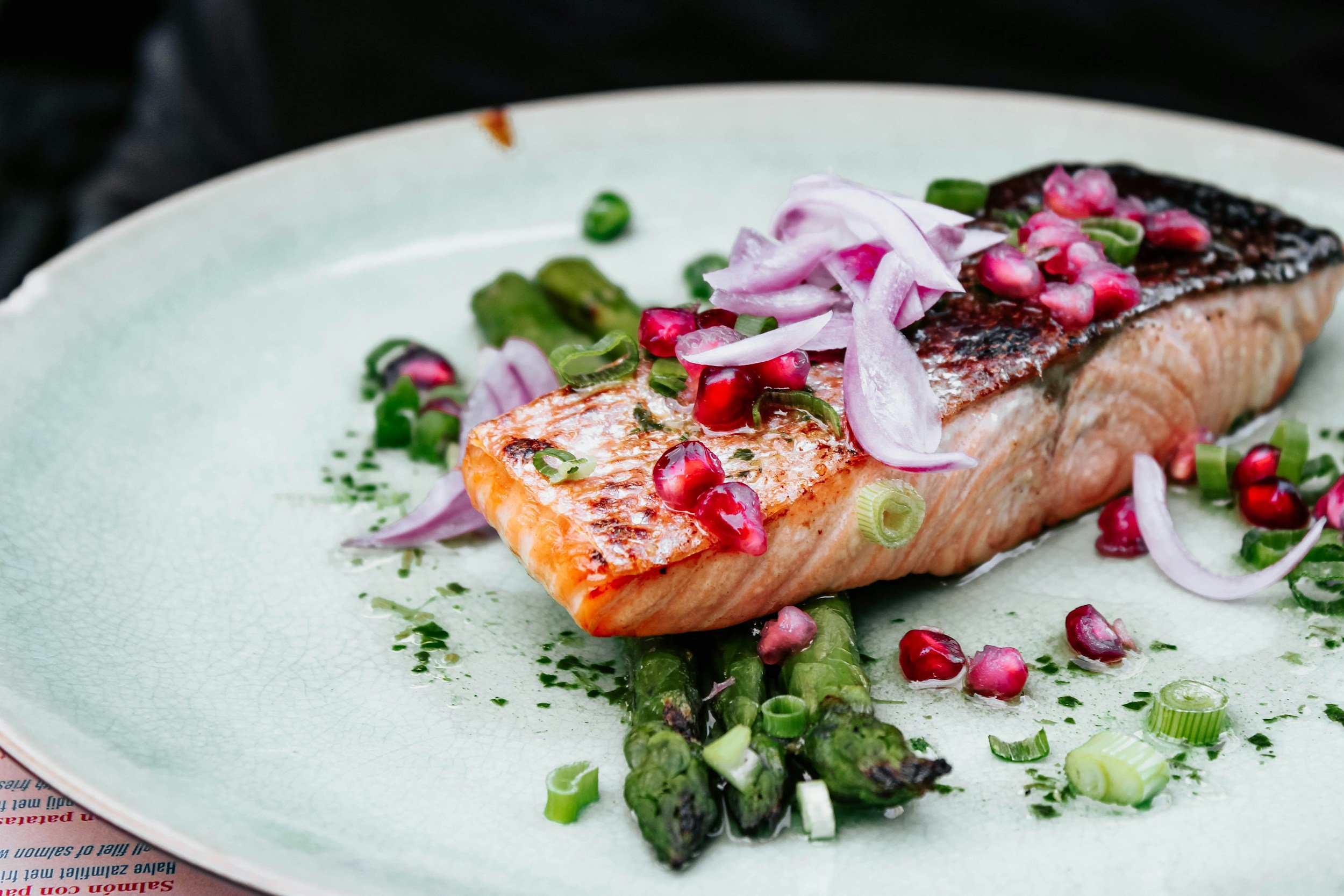
Oily fish such as salmon are a great source of the long-chain omega-3 fats EPA and DHA.
5. Ensure you’re eating enough
Weight gain and changes in body shape are really common concerns around menopause, and you might notice changes in where your body stores fat, particularly around your middle. I often discuss this with clients who feel their body simply isn’t responding to diet and exercise the same way it once did. But I want to reassure you that this doesn’t automatically mean you need to eat less.
There can be a lot of pressure at this stage of life to cut calories, carbs or even entire food groups. And if you notice your body changing, it can be tempting to start restricting what you eat. But eating a healthy diet and eating enough are two different things. Your body still needs enough energy to support your day-to-day life, particularly if you’re active or exercising regularly.
Regularly under-fuelling can leave you feeling tired and hungry and make it harder to recover from exercise. So alongside thinking about what you’re eating, pay attention to whether you’re actually eating enough.
A note on hydration, alcohol, and caffeine
I haven't included these in the five above, but it comes up a lot with clients, and it’s worth noting here.
Staying well hydrated is important for your health at any stage of life, so keep drinking regularly throughout the day (the UK’s Eatwell Guide recommends at least 6-8 glasses a day). Water is the obvious choice, but tea, coffee, and other drinks also contribute to your fluid intake.

Alcohol affects everyone differently — notice how it affects you and your symptoms.
When it comes to alcohol and caffeine, just know that they affect people differently. Some women find they can trigger or worsen symptoms such as hot flushes or disrupt their sleep, while others don't notice much difference at all. If you're struggling with either, it may be worth noticing patterns and experimenting with cutting back to see if it helps.
You might also find that alcohol simply doesn't agree with you in quite the same way it used to — something I hear quite often from women in their 40s and beyond, particularly around this stage of life. Changes that happen as we get older, including in our body composition, may partly explain why alcohol can affect us differently. And aside from menopause symptoms, drinking regularly or in larger amounts can affect sleep and add to longer-term health risks.
A final thought
Menopause can be challenging, particularly when symptoms are affecting your day-to-day life. But, as I mentioned earlier, you don't need a special diet or a long list of new food rules.
Instead, focus on the foundations: getting enough protein, looking after your bones, eating plenty of fibre and plants, choosing good-quality carbohydrates and healthy fats, and making sure you're eating enough overall. Small, consistent changes can all help support your health as your body moves through this stage of life.
And remember, nutrition is only one part of the picture. If you're struggling with symptoms, you don't simply have to put up with them — speak to your GP or another appropriate healthcare professional about the support and treatment options available to you.
There are some fantastic resources available, too:
The Pause Life by Dr Mary Claire Haver (Dr Mary Claire Haver is one of my go-to experts on menopause, describes perimenopause as a hormonal transition that can feel unpredictable, with symptoms often appearing well before your final period. I highly recommend checking out her work and following her on Instagram (@drmaryclaire) for clear, evidence-based advice and insights).
Explore some conversations from Wellbeing of Women featuring women and men sharing their menopause stories.