Dietary fibre explained: types, benefits and how to get 30g a day
Fibre—many people only really think about it when digestion feels off, which is a shame, because fibre does far more than keep things moving.
In the UK, adults are advised to aim for around 30g of fibre per day, but most of us land closer to 18–20g. And that fibre gap really does matter because fibre helps feed your gut microbes, supports steadier blood sugar, and can play a role in healthier cholesterol levels too.
In this guide, I’ll break fibre down, covering what it is, the main types (and what they actually do), and how to hit 30g+ a day with whole foods.
So first up—what is fibre, and what’s it doing in the body?
What is dietary fibre?
Dietary fibre is the broad name used for a group of carbohydrates found in plant foods. But, unlike most carbohydrates, fibre isn’t fully broken down and absorbed in the small intestine because our digestive enzymes simply can’t fully digest it.
Instead, it travels through the gut and does one (or both) of these things:
Some fibres are fermented in the large intestine by our gut microbes, producing important compounds, like short-chain fatty acids (SCFAs), that can support gut health.
Other fibres are less fermentable and mainly add bulk to stool, helping to keep our bowel movements regular.
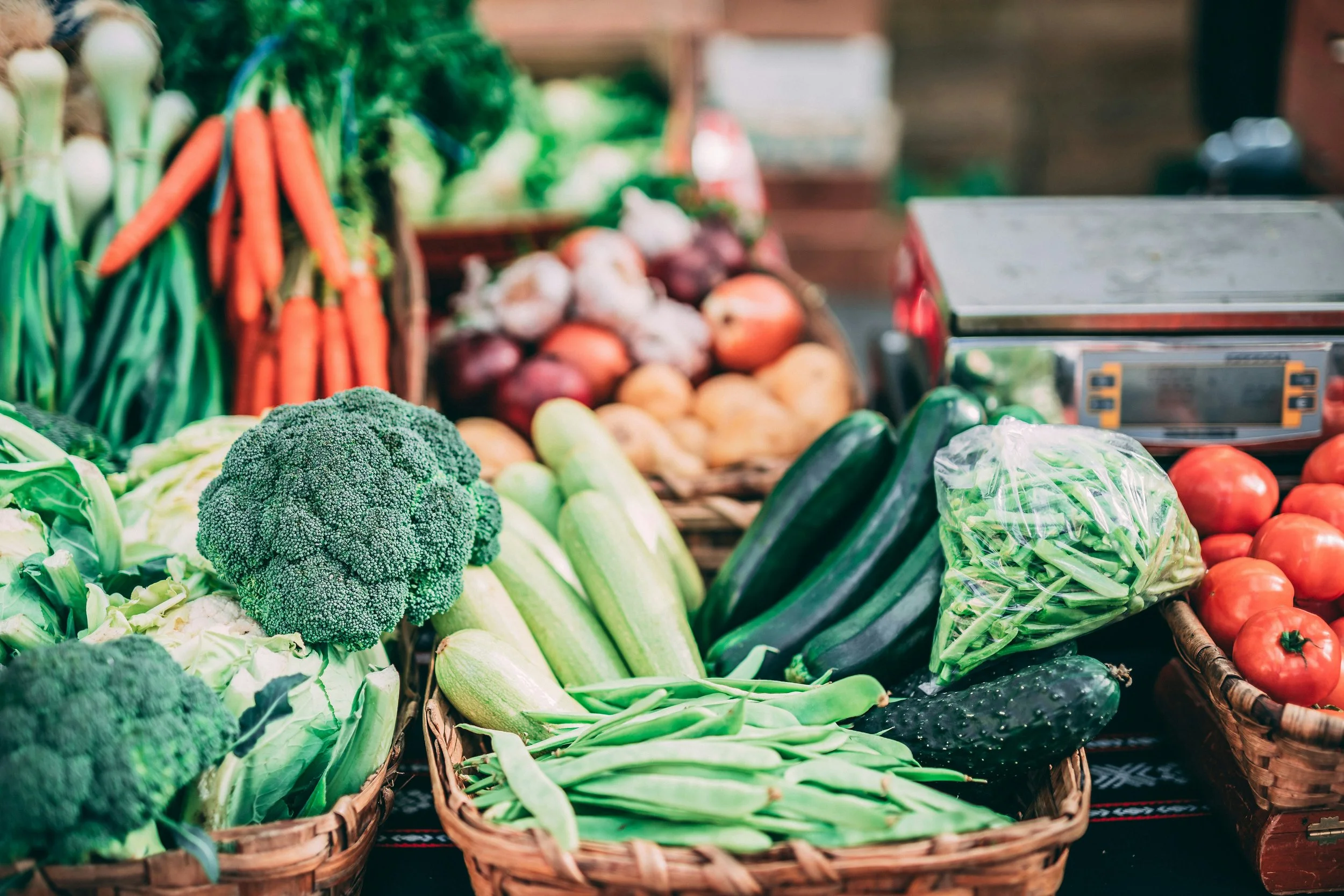
Fruit and veg contain different fibres (some gel-forming, some bulking) — many come from plant cell walls
So while fibres vary a lot depending on the plant they come from, the common theme is that fibre resists complete digestion and instead supports gut function in different ways depending on the type.
Types of dietary fibre
You’ll often hear fibre described as soluble, insoluble, prebiotic, and resistant starch.
Soluble fibre
Soluble fibre mixes with water, forming a gel-like texture in the gut that helps to slow down digestion.
Whole-food sources include:
Apples, bananas, citrus fruits
Oats
Beans, lentils
Root veg (carrots, sweet potatoes)
Insoluble fibre
Insoluble fibre doesn’t dissolve in water. Instead, it adds bulk and helps keep things moving through the gut (which is why it’s often linked with regular bowel movements).
Whole-food sources include:
Wheat bran
Nuts, seeds
Leafy veg
Potatoes (skins on!)
Prebiotic fibre
Prebiotic fibres are specific types of fibre that selectively feed beneficial gut microbes.
Whole-food sources include:
Onions, garlic, leeks
Asparagus
Legumes (lentils, chickpeas, beans)
Slightly green (less ripe) bananas
It’s worth noting that prebiotics and probiotics are easy to mix up—and while both can support gut health, they do different jobs and aren’t the same thing:
Probiotics are the live bacteria (or yeasts) that are beneficial to our health
Prebiotics are types of dietary fibre that help to support the growth of our good gut bacteria
Resistant starch
Resistant starch is a nice little fibre bonus found in starchy foods.
It’s called resistant because it’s stubborn (in a good way). It resists being broken down into sugar in the small intestine which means that instead of quickly turning into glucose, more of it travels to the large intestine, where it feeds your gut microbes.
It’s helpful to know that how you cook your carbs can increase their resistant starch too. When foods like rice, potatoes or pasta are cooked and then cooled (or even frozen), part of the starch changes into a more resistant form. For some, eating these cooked carbs cooled or safely reheated may lead to a slower rise in blood sugar after meals.
How to get enough fibre
Now you know the key fibre players—how can you be sure to get enough without overhauling your whole diet?
A 30g+ day usually comes from a mix of:
Fruit and veg (your Five A Day really helps here)
Wholegrains (oats, wholemeal bread, brown rice, wholewheat pasta)
Beans and lentils (often the biggest fibre boosts)
Nuts and seeds (small portions add up)
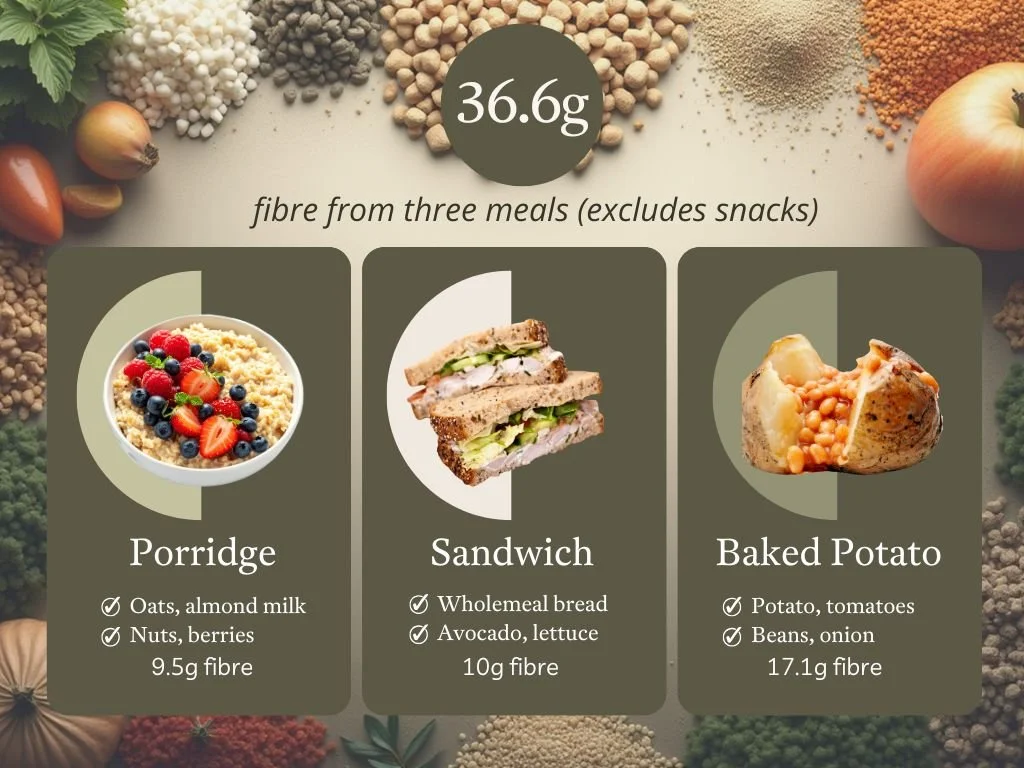
Getting fibre into your daily diet does’t have to be complicated. Simple meals can pack a hefty fibre punch
Below is an example day that delivers 30g+ comfortably.
Breakfast
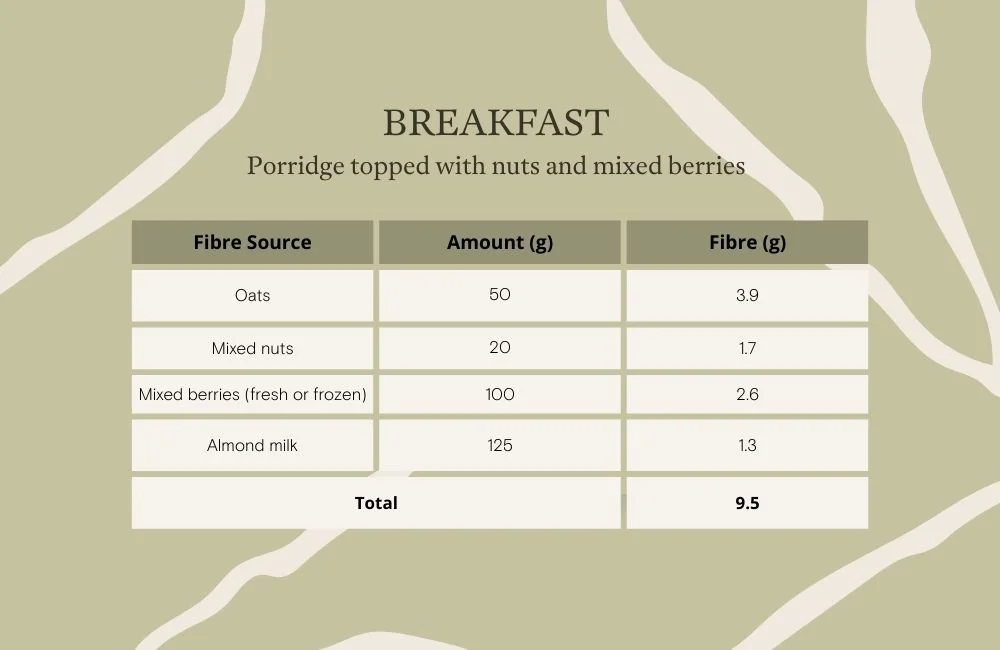
A fairly classic breakfast of porridge can deliver a significant chunk of your daily fibre
Lunch
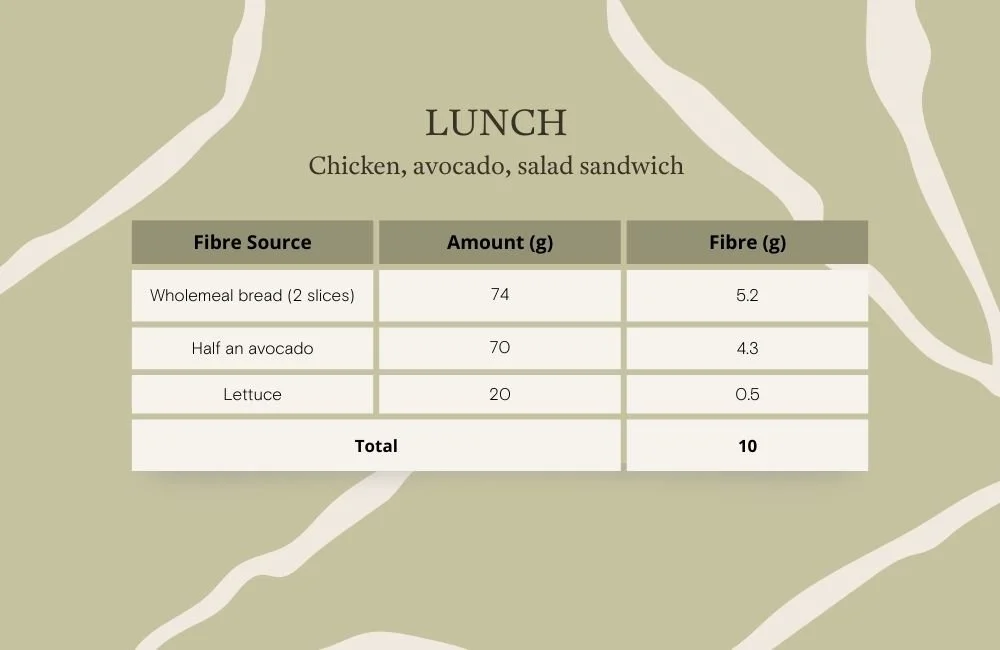
If a simple sandwich is your go-to lunch, you can up the fibre with additions like wholemeal bread and avocado
Dinner
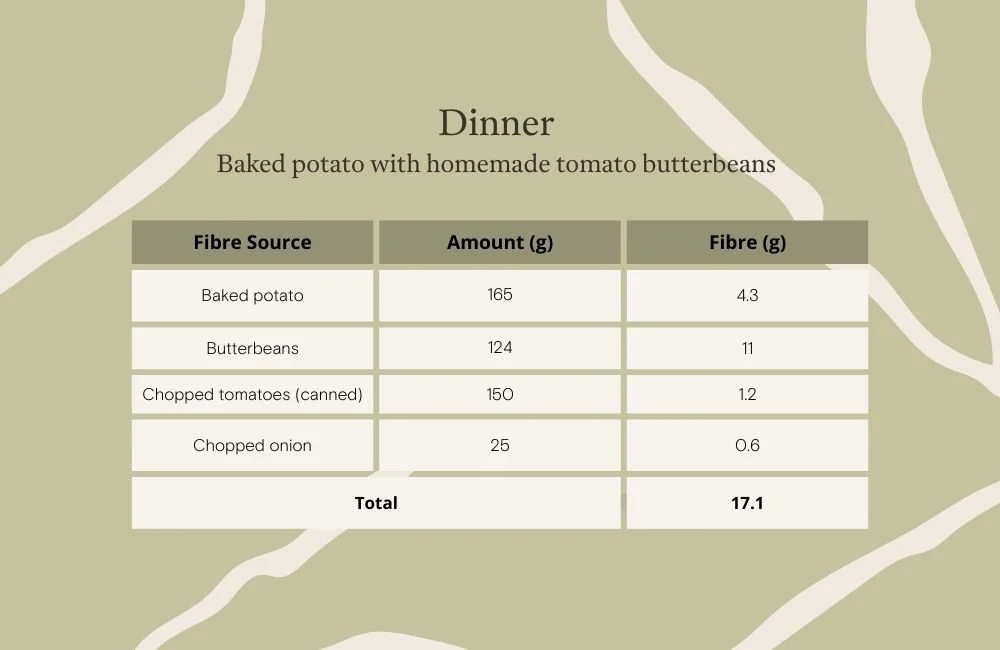
Upgrade your beans on toast with some delicious butterbeans for a big fibre hit (baked beans will do the job too)
Snacks
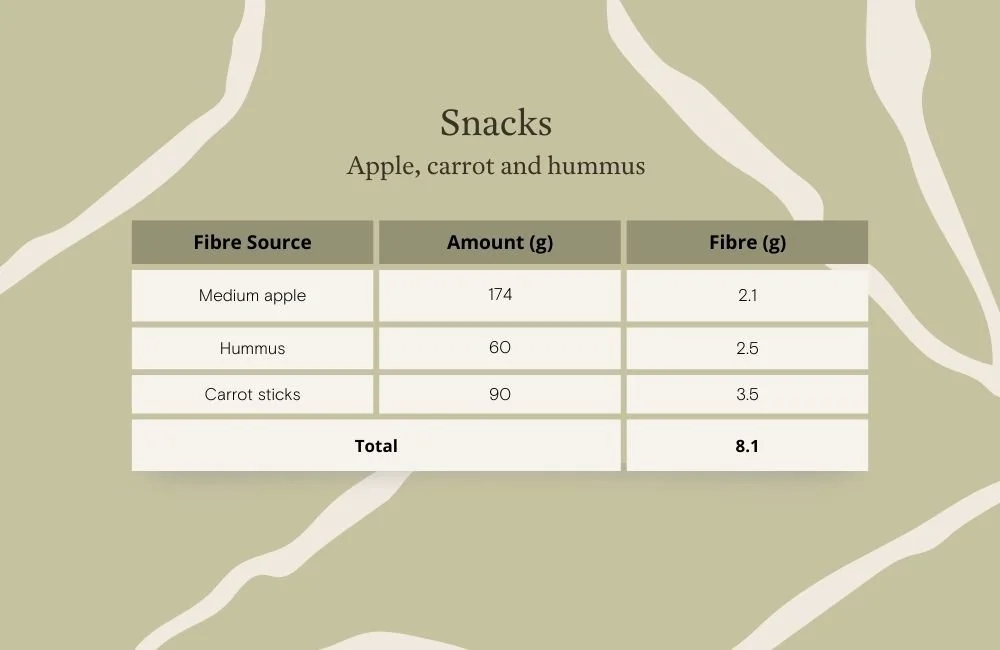
High-fibre snacks don’t need to be complicated. Opt for a humble apple or some carrots and hummus
Including snacks, this example day totals 44.7g fibre—well above 30g — and is a good example of how quickly fibre adds up when you add wholegrains, beans, fruit and veg to your meals and snacks.
How to avoid gas and bloating when you eat fibre
If your current intake is closer to 18–20g, quickly increasing your fibre can cause bloating or wind. So, increase gradually over 1–2 weeks and be sure to drink plenty of fluids, because fibre works best when it’s well-hydrated.
A few practical fibre tips
If you’re buying packaged foods like bread, cereal or wraps, labels can help you quickly compare products. Look for the fibre line in the nutrition table, and use these claims as a guide:
“High fibre” means the product contains at least 6g fibre per 100g
“Source of fibre” means the product contains at least 3g fibre per 100g
Compare like-for-like (e.g., breads with breads, cereals with cereals) and opt for higher-fibre options.
Watch serving sizes: fibre is often listed per 100g, so check what you’re actually eating.