Too tired to think about dinner? How to reduce the mental load of food
There’s a particular kind of tiredness that kicks in at the end of the day when the question of “What’s for dinner?” comes up. You know the feeling. You’re expected to generate ideas and make decisions about what to eat when, in reality, you don’t know and you don’t have the energy to decide.
And of course, it’s never just dinner, is it?
It’s what’s in the fridge, what needs using up, whether there’s enough, whether it feels healthy, what you actually fancy, whether you have time, and whether you can be bothered. If you’re feeding a partner or children, that mental juggling act often multiplies. But even if you’re only cooking for yourself, food can still feel like one more decision in an already full day — especially if you’re juggling work, commuting, exercise, a social life, appointments, or simply the general admin of life.

Many women find themselves burdened with an invisible weight known as the mental load
For many women, that constant low-level food admin is exhausting. And for good reason. Mental load is not just physical doing — it’s the invisible planning, organising, remembering, monitoring and decision-making that keeps life moving.
So if you’re tired of constantly thinking about what to eat, this article is for you.
I’m going to share some simple, practical strategies to help reduce that mental load and make eating well feel easier across the week — whether you’re feeding a family, cooking for a partner, or simply trying to look after yourself in the middle of a busy, full life.
Food is full of decisions
Research shows that women often carry a greater share of mental labour, particularly in family and household life (1). Repeated decision-making can also be draining in its own right: decision fatigue is commonly described as a decline in the quality of decisions after making lots of choices. And when food involves multiple choices a day, every day, it’s no wonder it can start to feel tiring.
That’s why I think it can be so helpful to move away from the idea that eating well has to mean thinking up new meals all the time. Often, what helps more is having a few simple systems in place so that nourishing yourself takes less thought in the first place.
This is why, when I work with clients, I usually don't try to turn food into a more elaborate project. I am trying to make it simpler. Instead, I think it is often more helpful to ask: How can we make eating well require less thought during the week?
Stop planning every recipe
You don’t need a fully formed meal plan in place to eat well. In reality, what often helps more is having the building blocks of simple meals in the house. That means:
Less: What exact recipe am I making on Thursday?
More: Do I have a protein, some veg or fibre, a carb, and something easy to make it taste good?
This can take a lot of pressure off, save time and money, and reduce waste. Because if you come home on a Wednesday night and you have salmon, broccoli, sweet potato and olive oil in the house, you already have the components of a balanced meal. You don't need inspiration or an elaborate sauce. You don’t even need to start Googling recipes while hungry. You just need to put the pieces together.
Think in building blocks
A simple weekly shop can start with four categories:
Protein: Fish, chicken, eggs, tofu, lentils, beans, Greek yoghurt
Veg / fibre: Broccoli, spinach, peppers, green beans, asparagus, carrots, tomatoes
Carbs/wholegrains: Brown rice, sweet potatoes, oats, wraps, couscous, quinoa, wholegrain pasta
Flavour staples: Lemon, olive oil, tahini, pesto, soy sauce, herbs, spice blends, seed mixes, nutritional yeast
Once those basics are in, a lot of meals can happen without much thought.
Use fresh food — but have back-up options
Too often, we buy lots of fresh food with good intentions, and then life happens. A late meeting. An errand you can’t put on hold. A child or partner who needs something. All this and your week is off track by Tuesday — the spinach has turned to gunk, the fish is past its use-by date, and suddenly everything feels harder than it should.
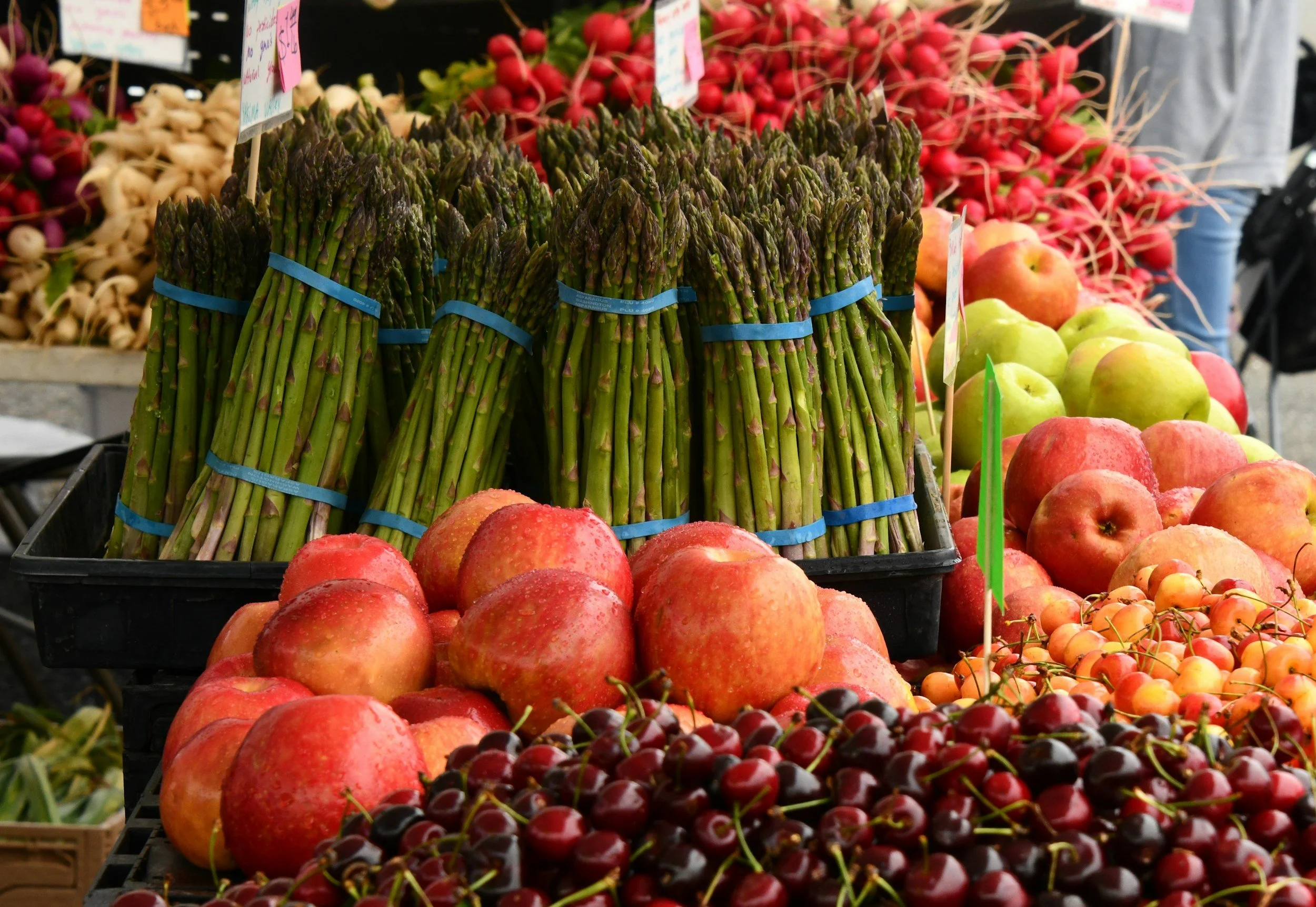
Fresh food is important but it’s a great idea to have some nutritious cupboard staples too
So rather than relying on fresh ingredients alone, it helps to build your shop around fresh staples plus back-up staples.
That might mean:
Fresh: Salmon, broccoli, peppers, chicken, sweet potatoes, salad leaves
Freezer back-ups: spinach, fish fillets, veg
Cupboard back-ups: beans in jars, lentils, pre-cooked brown rice, bread and wraps
That way, even if the fresh plan falls apart a bit, you still have a route to a meal. Your back-ups are the things that can quietly save the day when you can’t face another shop and the fridge looks uninspiring.
Buy what you actually like
This sounds obvious, but it really matters.
Avoid filling your fridge with the types of vegetables you feel you should eat but rarely want. Don’t buy grains you never cook. And choose proteins that don’t feel like a faff if you’re already short on time.
The most useful weekly strategy is one built around healthy foods you genuinely enjoy and can realistically see yourself reaching for on those evenings when you’re exhausted. That could mean salmon one week, chicken the next, beans another. It could mean broccoli every week because you know you’ll eat it. It could mean rice and sweet potatoes more often than quinoa because that’s what works for you.
Variety matters, but it doesn’t need to mean eating something completely different every meal or even every day. Often, it’s enough to create variety across weeks rather than demanding novelty from every single dinner.
Flavour is not optional
Meals can sometimes feel boring, not because they’re too basic, but because they’re under-seasoned. So, if you have a few easy flavour combinations in the house, basic ingredients can feel much more enjoyable without adding much effort.
For example:
olive oil, lemon, salt, black pepper
tahini, lemon, a splash of water
pesto stirred through grains or veg
soy sauce and sesame seeds
a favourite spice blend
a seed sprinkle or “bagel-style” mix (Google bagel mix/seasoning or everything mix/blend)
nutritional yeast to finish
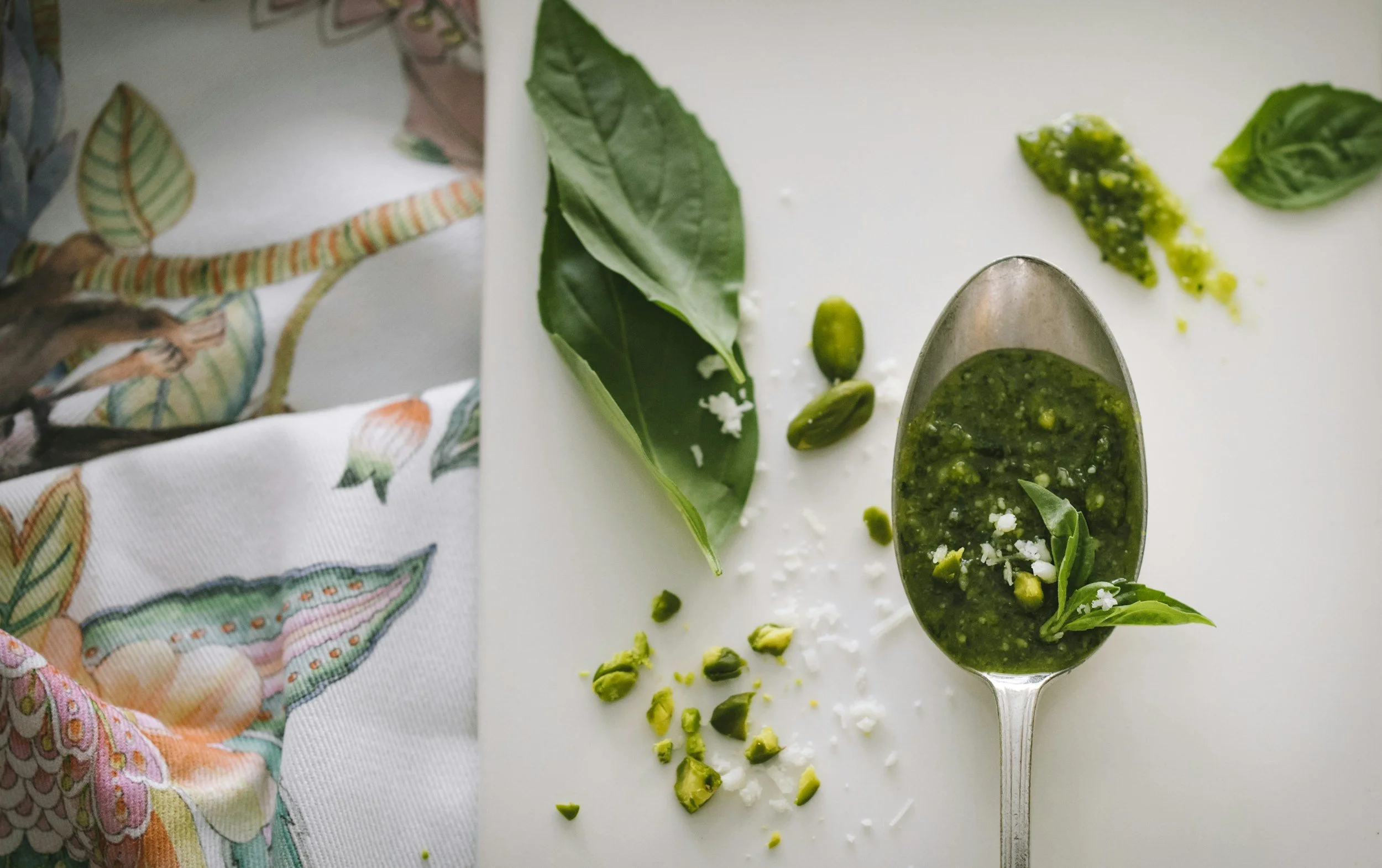
Something as simple as pesto can transform a simple dish adding a burst of great flavour
You don’t need a long ingredients list or a complicated sauce every night. Sometimes flavour just means having two or three things you know work and reach for automatically. That kind of shortcut matters, because it helps reduce the thinking.
What this can look like in practice
Here’s one example of how this might look across a week. The idea is not to plan every meal perfectly, but to have enough of the right building blocks in the house to make dinner feel easier and more repeatable.
Fresh proteins: salmon, chicken, eggs, feta
Back-up protein: jarred beans (Bold Beans Co has great options)
Veg: broccoli, asparagus, peppers, sweet potato, salad leaves
Carbs: brown rice, couscous, pre-cooked grains (there are some great own-brand options and Merchant Gourmet has a lovely selection)
Flavour: lemon, olive oil, pesto, herb or seed mix
Monday
Roast salmon with sweet potato and broccoli
Salmon roasted with olive oil, lemon, salt and black pepper, served with roast sweet potato chunks and steamed broccoli.
Cook enough salmon to cover another meal the next day. That might mean repeating the same dinner if that feels easiest, using the leftovers for a simple lunch or with eggs for breakfast.
Tuesday
Repeat Monday’s salmon meal
This is where repetition can be helpful. If you already know Tuesday is busy, there’s nothing wrong with making enough on Monday to cover dinner again the next night.
Wednesday
Herby chicken with peppers and couscous
Chicken seasoned with your favourite herb mix and grilled or roasted with peppers and onion, served with couscous. You could make the couscous with stock or bone broth (Brands like Freja have options you can keep in your cupboard) instead of water for extra flavour and a nutrition boost.
Cook a little extra chicken and veg to make lunch easier the next day — for example, in a wrap or with salad.
Thursday
Pesto butter beans with broccoli and asparagus
Broccoli and asparagus, steamed or roasted, served with warmed butter beans and pre-cooked grains, with pesto stirred through and a seasoned seed mix on top.
This also works well as a next-day lunch if you make extra.
Friday
Egg-based easy meal
Eggs with roasted peppers and feta, or a quick omelette or scramble using any leftover veg from earlier in the week.
Of course, you don’t have to eat exactly like this. The point is not to follow a rigid plan, but to create a rough structure that makes dinner easier to pull together. A few simple building blocks, a bit of repetition, and the odd planned leftover can go a long way in reducing the mental load of working out what to cook every night.
Making meals manageable
The women I speak to are rarely lacking information. Usually, they don’t need another lecture on balanced meals. They need food to feel more manageable in the middle of a busy, full life. That means building a way of eating that’s healthy, simple, flexible, and affordable.

Cooking and eating well doesn’t have to be complicated and stressful
Because ultimately, the aim is not to produce beautiful, elaborate meals every night. It’s to make sure you can come home, pull out a few ingredients, put something in the oven, steam or roast some veg, add flavour you actually enjoy, and feed yourself well without exhausting yourself in the process.
If you’re tired of overthinking food and want support to make eating well feel easier, that’s something I can help with. I work with women to optimise what they eat in a way that fits around real life — without rigid rules, complicated plans, or unnecessary overwhelm. Book a free intro call today to see how I can help.
References
Weeks, A. C., Kowalewska, H., & Ruppanner, L. (2025). Take a load off? Not for mothers: Gender, cognitive labor, and the limits of time and money. Socius: Sociological Research for a Dynamic World, 11. https://doi.org/10.1177/23780231251384527