Nutrition foundations for healthy skin
If you've ever felt like your skin just isn't behaving the way it used to — more dullness, dryness, slower healing, or reactivity that wasn't there before — you're not imagining it. For many women, there comes a point where skin that felt relatively easy to manage starts to change. Sometimes this coincides with hormonal changes; sometimes it's stress, sleep, or simply the cumulative effect of a busy life. Usually it's a combination of things.
The instinct is often to go straight to new products or supplements — and I get asked about skin supplements quite often. Skincare has a place, and supplements can too. But if you want your skin to be well supported for the long term, your diet and lifestyle are the first port of call.
Nutrition plays a role in the maintenance of healthy skin
Why nutrition matters for skin
Your skin is your body’s shield against the outside world — and it’s pretty incredible, really. The body’s largest organ, it is made up largely of water, protein, fats and minerals, and is constantly renewing, repairing and responding to everyday stressors like UV exposure, pollution, inflammation and seasonal dryness. As we get older, that renewal process gradually slows — which means a consistent supply of the right nutrients matters more, not less.
There's good evidence (1-6) that both macronutrients (like protein and healthy fats) and micronutrients (vitamins and minerals) are important for skin health — supporting structure, repair and overall function. And while no diet is a magic fix, the right nutritional foundations can make a meaningful difference to how your skin looks and feels day to day.
Healthy skin foundations
The basics come first. If they’re not in place, any benefits from individual nutrients — or supplements — are usually limited.
Enough energy overall
Under-eating is a surprisingly common reason skin looks flat, recovery is slower, and cravings drive less supportive choices.
Protein spread across the day
Protein is essential for skin health and it helps to include some protein at breakfast, lunch and dinner (where possible), rather than leaving most of it for your evening meal.
Healthy fats, regularly
Healthy fats help support the skin barrier. A “low-fat” diet can sometimes backfire for dry, reactive skin.
Sun exposure awareness
UV is one of the biggest drivers of visible skin ageing. Nutrition supports resilience, but it won’t magically make up for overexposure. Investing in a good SPF is always sensible (I like Sun Day SPF 50 from Skin Tropic, Skin Shade, their tinted version, and EltaMD has some great options like this SPF 50.
Sleep and stress support
Stress and poor sleep often show up on the skin (we’ve all experienced this , I’m sure) — directly (inflammation) and indirectly (food choices, alcohol, late nights, skipped meals).
Protein for repair
Skin is made up largely of proteins. Protein supplies the amino acids needed for repair and renewal, and you’ll generally get more benefit from spreading intake across the day rather than having very little earlier on and trying to catch up at dinner.
If you eat animal foods, you’ve got plenty of options: eggs, Greek yoghurt, fish, poultry, meat, and dairy. But you can absolutely support skin well on a vegetarian or vegan diet too — it just helps to be more intentional about your protein intake.
For vegetarians and vegans, great, reliable protein sources include things like tofu, tempeh, edamame, beans, lentils, chickpeas, soya yoghurt, and higher-protein grains like quinoa (with nuts/seeds as helpful extras, not the main event).
A simple way to think about it is: choose a protein anchor at each meal, then build the rest of the meal around it.
Healthy fats to support the skin barrier
Your skin barrier relies on fats, and when intake is low, skin can feel drier and more reactive. It’s not the only factor, but it does matter.

Healthy fats help support your skin barrier — think avocado, olive oil, nuts and seeds (image Elle Hughes/Pexels)
If you eat fish, oily fish like salmon, sardines or mackerel are good options to include from time to time. If you don’t, plant sources like chia, ground flax and walnuts can help. Algae-based omega-3 supplements are another option, too — more on supplements later.
To be clear, this isn’t about eating a high-fat diet. It’s about making sure healthy fats aren’t missing altogether.
Vitamin C for collagen support, antioxidant defence, and healing
Vitamin C is one of the most skin-relevant nutrients, and it definitely earns its reputation.
When most people think of the benefits of vitamin C, they think of support during coughs and colds, but, vitamin C has another important role — it helps your skin make collagen. It can be helpful to think of collagen as “scaffolding” proteins that help skin stay firm and resilient. Without enough vitamin C, collagen building slows down.
Vitamin C also acts as an antioxidant in skin (7). Sun/UV and pollution create oxidative stress, and vitamin C helps neutralise some of that stress — and it also supports vitamin E’s antioxidant role (they work as a team).
And it plays a key role in skin repair and wound healing. In fact, poor wound healing is one of the classic signs of low vitamin C status — and in more extreme cases of deficiency, like scurvy, skin fragility becomes very visible. It's rare now, but it's still seen in people with very restricted diets or prolonged low fruit and veg intake, and it's a good reminder of how directly this nutrient shows up on the skin.
Getting enough vitamin C through food is straightforward if your diet includes fresh fruit and vegetables. Good sources include peppers, citrus, strawberries, kiwi, broccoli and Brussels sprouts — and as vitamin C can be reduced by cooking, a mix of raw and cooked is a helpful way to make sure your needs are covered.
Zinc for skin repair and resilience
Zinc supports skin repair and wound healing, and it plays a role in immune function and cell growth — all relevant to skin resilience.
I’m not thinking of zinc as a fix for specific skin conditions, but it’s one of the nutrients I’ll consider if someone’s intake is low, their diet is quite restricted, or things like healing and infections seem to be an issue.
If you eat a healthy diet you’re likely getting enough zinc. Animal foods, shellfish and meat are rich sources, with dairy and eggs contributing too. For vegetarians and vegans, pumpkin seeds, tahini, beans/lentils and wholegrains can support intake — and food prep methods like soaking/sprouting beans and using sourdough can slightly improve mineral availability.
B vitamins for healthy cell turnover
B vitamins play a role in energy production and normal cell turnover — which matters for tissues that are constantly renewing, like skin.
You’ll often see individual B vitamins discussed in relation to skin, but in practice, they tend to work together. Low or inconsistent intake — particularly in more restricted diets — can sometimes show up as dullness, slower recovery, or changes in skin condition.
Rather than focusing on individual supplements, it’s more helpful to think about overall intake. B vitamins are found across a wide range of foods like wholegrains, legumes, leafy greens, eggs and dairy, meat and fish, and nuts and seeds.
If your diet is varied and you’re eating regularly, you’ve likely got your B vitamins covered.
Polyphenols (support from plant foods)
Polyphenols are plant compounds found in colourful fruit and veg, olive oil, herbs, spices, tea, coffee and cocoa. They don’t work like a drug — and they’re not a quick fix — but they are part of the reason diets rich in plants are consistently linked with better health outcomes.
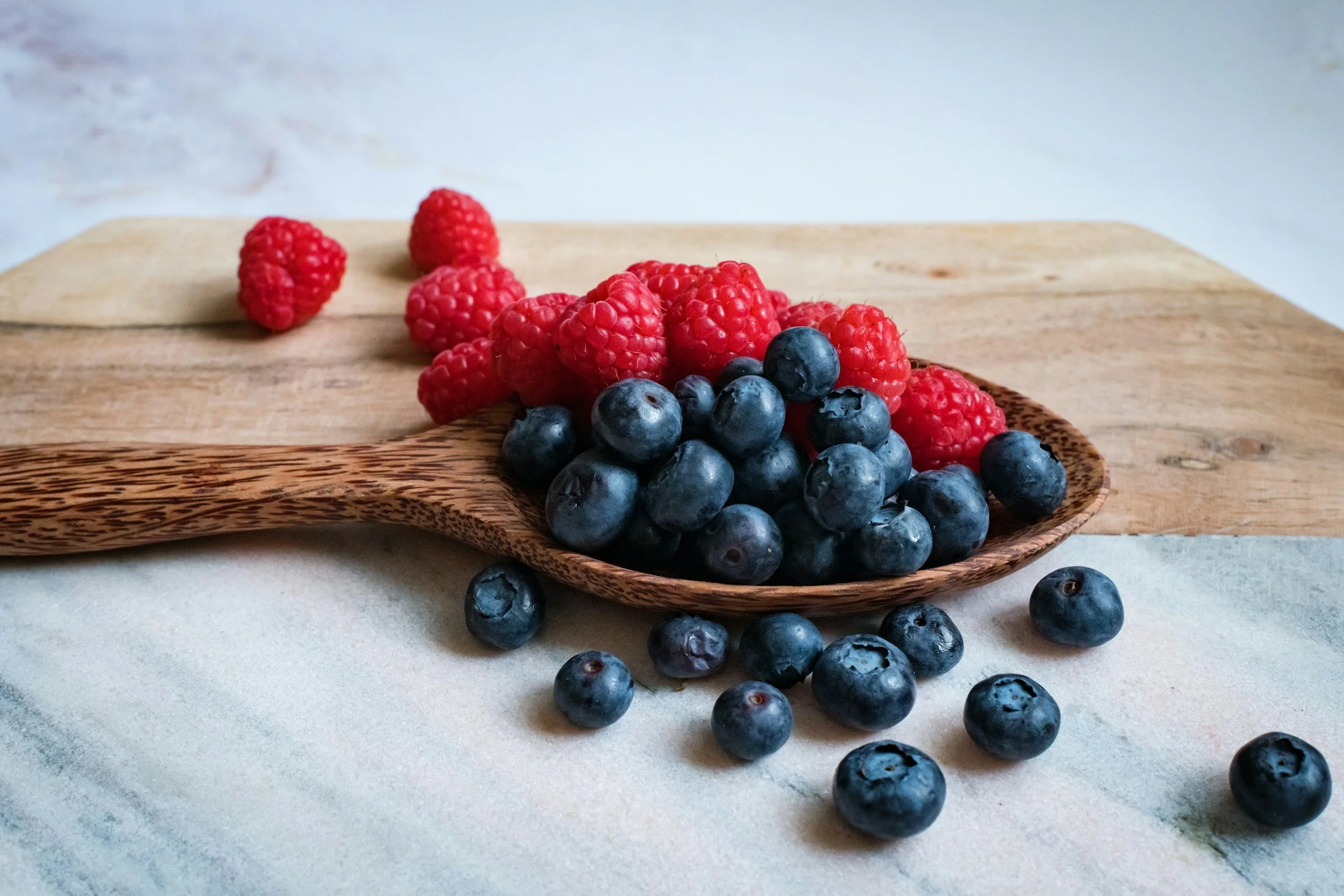
Berries are a great source of polyphenols
For skin, think of polyphenols as supporting the body’s antioxidant defences and inflammatory balance over time. Aim for regular colour and variety. Berries, citrus, leafy greens, tomatoes, herbs, olive oil, and the occasional square of dark chocolate all count.
Hydration habits for healthy skin
Hydration helps, and dry skin does become more common with age — but skin hydration isn’t only about how much you drink. It also depends on your skin barrier, your fats and micronutrients, and environmental factors such as heat, wind, hot showers, and harsh cleansers.
A simple approach: drink regularly throughout the day, include water-rich foods (fruit/veg, soups, yoghurt), and don’t unintentionally strip the barrier with overly aggressive skincare.
Collagen and “beauty supplements”
This article is about whole-food nutrition first — but I know people will still ask, so here’s my honest take.
Collagen is a major structural protein in skin and connective tissues, and collagen in skin declines with age. Research suggests hydrolysed collagen supplements may improve skin hydration and elasticity in some studies (8), but results vary and there’s still a strong need for more high-quality trials.
Even if you take collagen, your body breaks it down and uses it where it’s needed — so there’s no guarantee it will show up in your skin.
If someone wants to try collagen, I’d call it optional, and only worth considering once the foundations are in place: enough protein, plenty of vitamin C-rich foods, healthy fats, and overall diet quality.
For more on skin in perimenopause and beyond, I highly recommend this article: Can collagen help menopausal skin? by Dr Louise Newson.
When supplements might support skin health
Supplements make most sense when they're targeted and justified — for example, if your diet is very restricted or low in variety, if heavy periods, gut issues, or certain conditions affect how well you absorb nutrients, or if a blood test has flagged a deficiency. They're less likely to help if the basics aren't in place, or if you're taking high-dose blends without a clear reason.
Next steps for healthy skin
If this feels like a lot, it doesn't need to be. The foundations are simpler than the supplement industry would have you believe — and small, consistent changes tend to make more difference than dramatic overhauls.
A good starting point looks something like this: a protein anchor at each meal (including breakfast), a daily source of vitamin C, healthy fats regularly, plenty of colour and variety from plants across the week, and hydration habits that actually support your skin barrier rather than just hitting a number.
Sleep, stress and sun awareness matter too — not because you need to be perfect, but because they work alongside everything else.
If you're not sure where your gaps are, or you want a clearer picture of what's actually going on for you specifically, I’d be happy to help. You can find out more about how I work and book a free intro call.
References
Akdeniz, M., Tomova, A., and Biedermann, T. (2018) ‘Diet and skin health: The role of dietary intervention in skin disease’, Journal of the European Academy of Dermatology and Venereology, 32(10), pp. 1651–1660.
Boelsma, E., Hendriks, H.F.J. and Roza, L. (2001) ‘Nutritional skin care: health effects of micronutrients and fatty acids’, The American Journal of Clinical Nutrition, 73(5), pp. 853–864.
Pullar, J.M., Carr, A.C. and Vissers, M.C.M. (2017) ‘The roles of vitamin C in skin health’, Nutrients, 9(8), p. 866.
Schagen, S.K., Zampeli, V.A., Makrantonaki, E. and Zouboulis, C.C. (2012) ‘Discovering the link between nutrition and skin aging’, Dermato-Endocrinology, 4(3), pp. 298–307.
Sies, H. and Stahl, W. (2004) ‘Nutritional protection against skin damage from sunlight’, Annual Review of Nutrition, 24, pp. 173–200.
World Health Organization (2020) Healthy diet. Available at:https://www.who.int/news-room/fact-sheets/detail/healthy-diet
Pullar, J. M., Carr, A. C., & Vissers, M. C. M. (2017). The roles of vitamin C in skin health. Nutrients, 9(8), 866.https://doi.org/10.3390/nu9080866
Pu, S.Y., Huang, Y.L., Pu, C.M., Kang, Y.N., Hoang, K.D., Chen, K.H. and Chen, C. (2023). Effects of oral collagen for skin anti-aging: A systematic review and meta-analysis. Nutrients, 15(9), 2080. https://doi.org/10.3390/nu15092080