Anti-inflammatory eating: what really matters?
Inflammation is a word we hear a lot. Perhaps it’s because more people are experiencing symptoms they connect with inflammation, or perhaps it’s because we understand more about the role it can play in health. Either way, it’s definitely a hot topic.
Personally, I’m often asked by clients who’ve been told they have an inflammatory condition — or who feel they should be eating an “anti-inflammatory diet” — what that actually means.
So, what does inflammation look like? Is it always bad? Does everyone need to eat the same way? And when it comes to nutrition, what really makes a difference?
In this article, I’ll look at what inflammation actually is, how it can show up in the body, and what an anti-inflammatory way of eating might look like in real life.
What is inflammation?
For many people, inflammation immediately sounds like a bad thing, but it’s actually a normal and important part of the body’s immune response — one of the ways your body protects, heals and repairs itself.
If you cut yourself, fall ill, exercise intensely or fight an infection, your immune system creates inflammation as part of the body’s healing and repair response. This is completely normal, and in the short term, it’s protective. This is often referred to as acute inflammation — designed to help the body heal, defend and recover.

When you’re ill, inflammation is one of the ways the immune system responds and recovers (Image: Andrea Piacquadio, Pexels)
Chronic inflammation is different. This is low-level inflammation that persists longer than we’d like, and over time, it can start to affect more of the body than it should. This is the type of inflammation people are usually talking about when they mention long-term health conditions or anti-inflammatory eating.
Examples of conditions where inflammation may play a role include rheumatoid arthritis, inflammatory bowel disease (IBD), psoriasis, endometriosis, PMOS — previously known as PCOS — and some autoimmune conditions, many of which affect women disproportionately.
If you’d like a simple explanation of the science, I really like Dr Matt and Dr Mike’s episode on acute inflammation — they make medical topics much easier to understand.
What can inflammation feel like?
This is where things can become a little less straightforward, because inflammation doesn’t always show up in one obvious way.
Depending on the person and what might be driving it, inflammation can sometimes be linked with things like:
fatigue or low energy
joint discomfort
digestive symptoms
brain fog
skin flare-ups
poor recovery
feeling generally run down
At the same time, many of these symptoms are non-specific and can have multiple causes, so it’s important we don’t assume all inflammation is automatically the reason behind every symptom.
What contributes to chronic inflammation?
And while inflammation can sometimes feel vague or hard to pin down, there are certain things that may influence it over time.
Usually, there isn’t one single cause (which can make things a little tricky!). Instead, it’s often influenced by a combination of things, including:
stress
poor sleep
smoking
low physical activity
chronic illness
alcohol intake
highly processed diets
low fibre intake
nutrient insufficiency
long-term under-eating or restrictive diets
This also becomes more relevant as we get older. Researchers sometimes use the term *inflammaging* to describe the low-grade chronic inflammation associated with ageing and modern lifestyle factors. It’s one reason why things like muscle mass, movement, sleep, nutrition and stress management can become increasingly important over time.
So what does anti-inflammatory eating look like?
When people hear “anti-inflammatory diet”, they often think it means cutting out lots of foods or finding the one magic ingredient that will fix everything.
But in practice, it’s usually much simpler than that. The evidence tends to point more towards overall eating patterns than individual “superfoods” — and while approaches like elimination diets can be useful for some people, they’re best done with proper support.
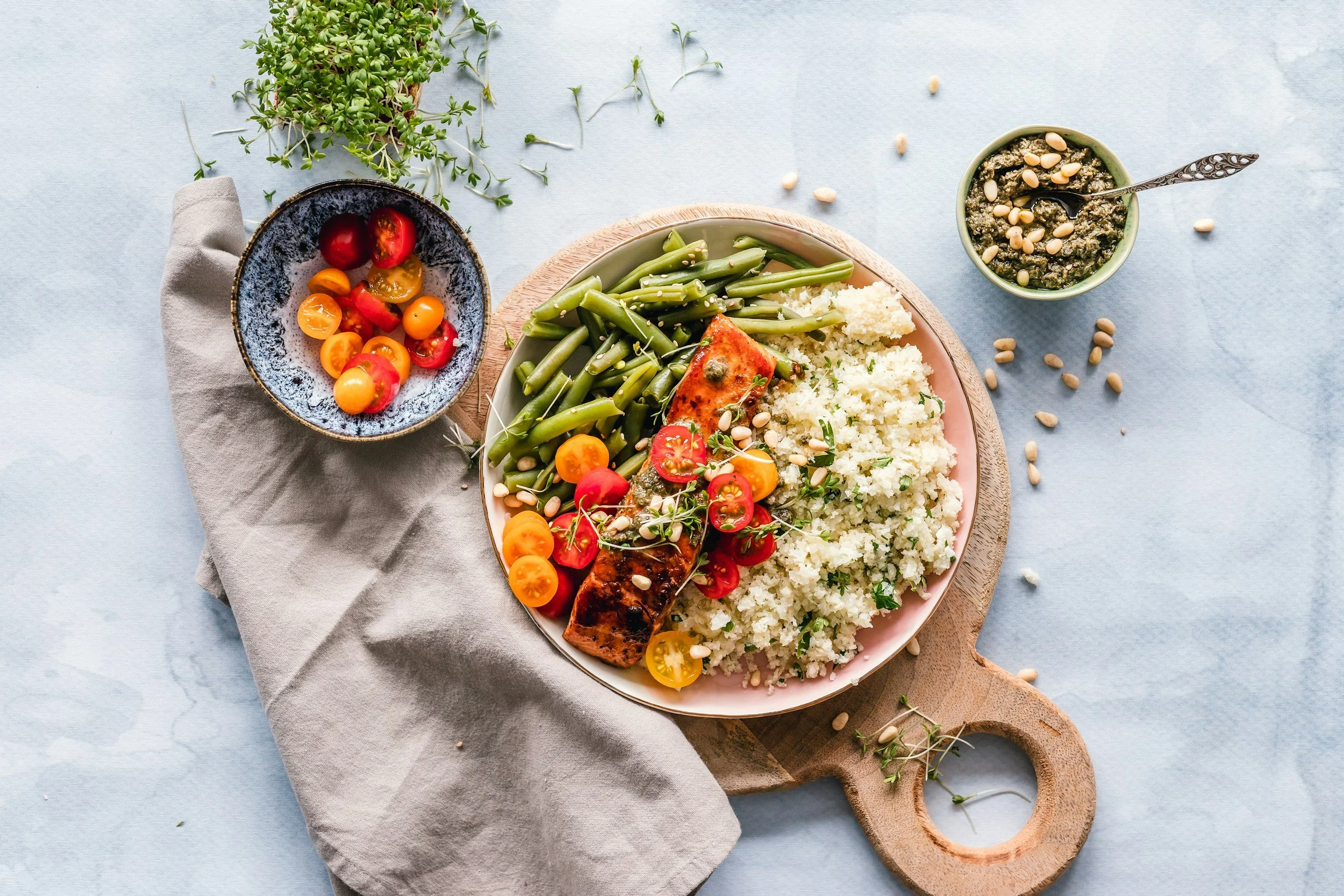
Supportive eating patterns often include fibre, healthy fats, colourful plants and balanced meals
Mediterranean-style eating is a good example of a pattern that’s often discussed in relation to inflammation and long-term health. Generally, this means focusing on:
plenty of vegetables and fruit
fibre-rich foods
healthy fats
omega-3 fats
legumes and wholegrains
herbs, spices and polyphenol-rich foods
regular, balanced meals
Why dietary fibre matters
One thing many of us don’t get enough of is fibre.
Fibre supports digestion, but it also helps feed your gut microbiome — the community of microbes living in your gut, which can influence inflammation and overall health.
Foods like:
beans and lentils
oats
nuts and seeds
vegetables
fruit
wholegrains
can all help increase fibre intake and support a more diverse gut microbiome.
Some types of dietary fibre also act as prebiotics, meaning they feed beneficial gut bacteria. When these fibres are broken down in the gut, they produce short-chain fatty acids, including butyrate, which may help support the gut lining and influence inflammation. That said, you don’t need to suddenly load up on fibre overnight. Small, gradual increases are often much more realistic — and much more comfortable for digestion.
The role of overall dietary patterns
People can understandably become very focused on finding the one food they need to cut out.
Sometimes, more targeted approaches — like low FODMAP or elimination-style diets — can be genuinely helpful, especially when there’s a clear reason for using them. But cutting out lots of foods without the right support can also make your diet more limited, more stressful and harder to keep up.
The same applies to foods that often get blamed for inflammation, such as sugar, seed oils or processed foods.

Foods like crisps, sweets or processed snacks often get labelled as “inflammatory”, but one food rarely tells the whole story. What matters most is how your overall diet looks over time
Highly processed dietary patterns may contribute to poorer health outcomes partly because they take the place of more nutrient-dense foods, fibre and variety. But that doesn’t mean every processed food is automatically inflammatory, or that you need to overthink every ingredient in your diet
For most people, the bigger picture is far more important: eating enough, getting enough protein, including plenty of fibre, adding variety, and looking at how you eat and live over time.
Where do omega-3s and colourful foods fit in?
Some foods and naturally occurring plant compounds are particularly interesting in inflammation research.
Omega-3 fats, found in foods like oily fish, walnuts, flaxseeds and chia seeds, have been widely studied for their potential role in influencing inflammation pathways.
Polyphenols — naturally occurring compounds found in foods like berries, olive oil, herbs, spices, tea and dark chocolate — are also an area of growing interest.
This is one reason why colourful, plant-rich diets are often associated with better long-term health outcomes.
What about inflammation and women’s health?
Inflammation can also be part of the conversation in areas like fertility, hormones, PMOS (previously known as PCOS), endometriosis and menopause. That doesn’t mean nutrition is the whole answer, but it can be one useful part of the picture.
This is where personalised support can be helpful, because symptoms, routines, health history and day-to-day life can look very different from one person to another.
So what should you actually focus on?
For most people, supporting inflammation through nutrition is much more everyday than dramatic. It’s usually less about supplements, detoxes or cutting out lots of foods, and more about eating regularly, getting enough protein, increasing fibre, adding more plants, supporting sleep, moving your body consistently and avoiding all-or-nothing thinking around food.
In real life, that might look like adding beans or lentils to meals more often, including protein at breakfast, using olive oil, nuts and seeds, or building meals around fibre and colour rather than restriction.
What if you don’t have an inflammatory condition?
Even if you don’t have a diagnosed inflammatory condition, many of the same principles still support overall health, energy, recovery and long-term wellbeing.
Eating enough fibre, including a variety of plant foods, balancing meals, sleeping well and managing stress are all supportive habits that may benefit health more broadly — not just inflammation.
The aim is to build realistic habits that support your body consistently, without making food feel more complicated than it needs to be.
Final thoughts
Inflammation is complex, and I find that there’s rarely one food or one habit responsible for how someone feels. That said, nutrition can still play an important role in supporting overall wellbeing, energy, recovery and long-term health. My take? Rather than getting caught up in every headline or food rule, the aim is to build a way of eating that feels supportive, realistic and sustainable for you.
If you’d like support making sense of your diet, symptoms or health goals, you can book a free intro call to explore what would be most helpful for you.